




 Roof catalog
 Manual
 Betek catalog




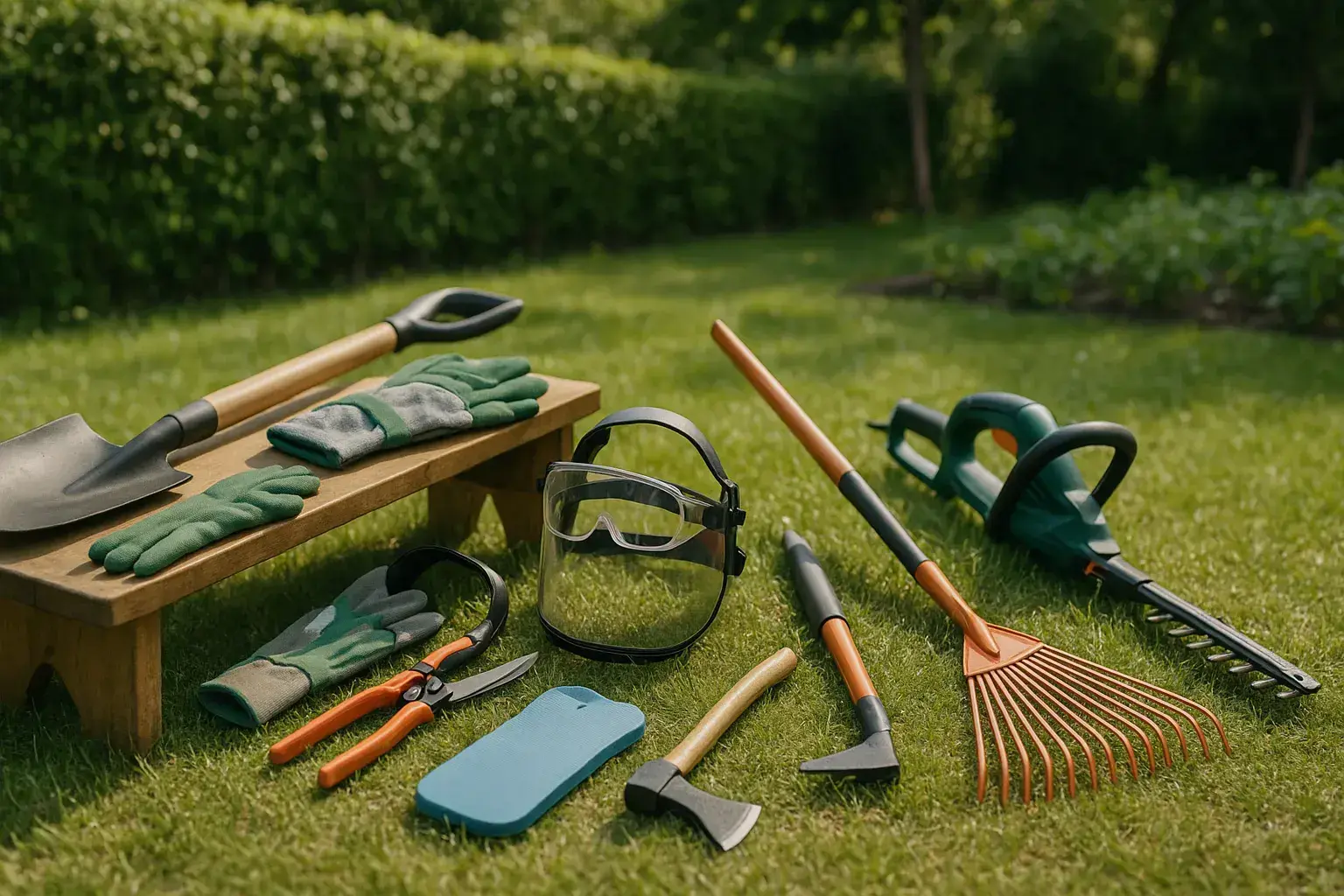
Before heading out to work in your garden and picking up your tools, it’s essential to think about your safety. Being close to nature and taking care of plants is one of the best ways to relax, but the process is much more enjoyable when you feel safe.
To avoid unexpected problems, it’s important to use garden tools correctly and follow safety guidelines, which we’ll share in detail in this blog.
Common Garden Tools and Safe Usage Practices
Although each tool has its own specifics, there are general approaches that make working with any of them safer and more efficient.
For example, when using cutting tools such as saws, pruning shears, or axes, the most important requirement is that their blades are sharp. This is directly related to safety, as sharp tools require less effort and are therefore less dangerous. At the same time, always control the trajectory of the blade and make sure your hands and other parts of your body are at a safe distance to avoid cuts or injuries.
Power tools require special attention and preparation due to their strength and speed. Before starting work, it is essential to carefully read the manual of the specific model to avoid potential hazards. For instance, when using a chainsaw, one of the biggest risks is kickback. This usually happens when the upper front tip of the bar suddenly touches a hard surface, causing the saw to move uncontrollably and jerk backward. As for grass trimmers, the main risk comes from the rotating head (line or blade), which can propel solid objects—such as small stones, wood pieces, or debris—at high speed. This can cause injury to you, people nearby, or damage surrounding objects.
Pruning shears may seem like a simple tool, but they still require careful handling. First and foremost, always pay attention to your other hand while working. To avoid cuts, make sure it is positioned safely away from the blade. It is also important to wear gloves, which will protect you not only from sharp edges but also from thorns.
Working with an axe requires particular attention and strict adherence to safety rules. Before swinging it, create a safe working area: ensure there is enough free space around you and that nothing obstructs the swing path. For example, a tree branch should not interfere, as it may alter the direction of the strike. Also, avoid working on ground with large stones, metal objects, or other obstacles that could cause you to lose balance.
When using shovels and spades, two main risks should be considered: back injuries and damage to underground utilities. To prevent back pain, remember that improper waist movement is a common cause of injury. When moving soil, never twist only your waist—this puts strain on your muscles and spine. Instead, take a step and turn your whole body.
The second and more serious risk involves underground communications. If possible, find out in advance whether water, gas, or other lines run through your garden.
What to Consider Before Starting Work
Before discussing tool usage rules, let’s look at general principles that make gardening safer and more comfortable.
Before you begin, make sure you have the proper protective equipment. Each task requires appropriate gear. For example, when working with chainsaws or grass trimmers that can throw debris at high speed, you should use not only safety goggles but also a full face shield. Gloves are a universal form of protection—they are useful when cutting, handling thorny plants, working with soil, or dealing with chemicals. They help prevent cuts, skin irritation, and contact with soil-borne pathogens.
Ergonomics is just as important as protective equipment. With the right approach, you can avoid unnecessary strain and injuries. For example, when working close to the ground—cutting grass, planting flowers, or fertilizing soil—kneel instead of bending over, as it reduces pressure on your body. When lifting heavy objects, keep your back straight and hold the load close to your body. This way, the effort is transferred to your leg muscles, reducing strain on your back and helping prevent spinal injuries.
Despite the calm atmosphere often associated with gardening, unexpected risks can arise. Therefore, it’s important to pay attention to environmental factors as well. For example, during storms, lightning can strike even up to 16 km away from the epicenter.
Be especially cautious when working with plant protection products and chemicals—always follow the instructions on the label carefully.
Warning: Never burn poisonous plants, as the smoke can pollute the air and cause serious respiratory problems. Also, be mindful of insects that may carry diseases. Use repellents and carefully check your body after working in the garden.
Finally, one of the most critical yet often overlooked risks is underground utilities. During any digging work—even when making a small hole—be cautious of underground lines such as water and gas pipes.
Maintaining Garden Tools for Long-Term and Safe Use
Well-maintained tools not only last longer but are also safer and more effective. Damaged or dull tools require more effort and increase the risk of injury. That’s why garden tools need regular care, which is based on a few key principles: cleaning, sharpening, and maintaining mechanical parts.
As mentioned, cleaning is the first and most important step. After each use, removing soil, plant residue, and moisture helps prevent rust. For example, shovels simply need to be cleaned and stored in a dry place. Pruning shears should be disinfected periodically to prevent spreading plant diseases.
Always remember: a sharp tool is a safe tool. When sharpening, it’s important to understand the specifics of each tool. For instance, when sharpening an axe, you must maintain the correct blade angle. Secure the axe firmly and move the file evenly from the center toward the edge, then repeat on the other side. Both sides must be sharpened equally to maintain balance.
The final principle is maintaining mechanical and specific components. This includes lubricating moving parts and checking fasteners such as screws and bolts. This is especially important for complex tools. For example, with chainsaws, it is essential to check and refill the oil reservoir before each use to ensure proper chain lubrication.
Gardening is truly an enjoyable activity when you know how to work safely and effectively.