




 Roof catalog
 Manual
 Betek catalog




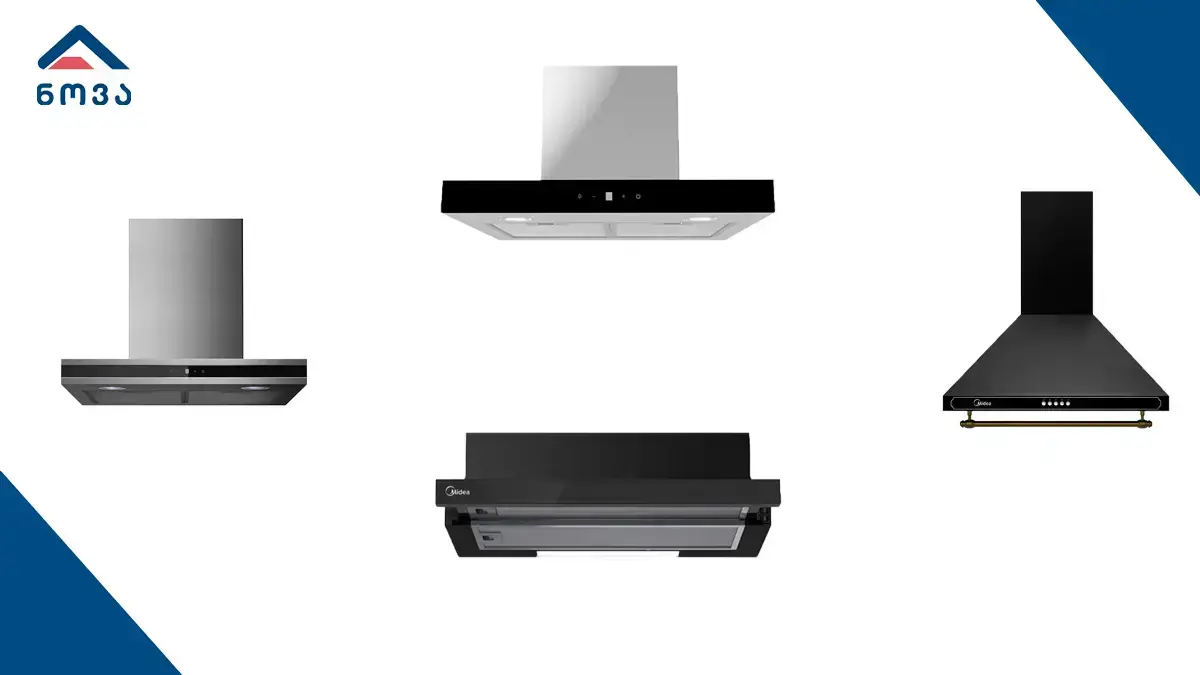
Spending time in the kitchen is part of everyday life — on average, people spend about 67 minutes a day there, which adds up to nearly 400 hours a year. While design and ergonomics matter, one often overlooked factor that greatly affects your comfort is proper ventilation.
Cooking releases odors, steam, and grease particles that can impact both air quality and the overall atmosphere of your home. That’s why choosing the right kitchen hood (range hood) is essential.
So how do you pick the perfect one? Here’s a practical guide.
Types of Kitchen Hoods: Finding the Right Fit
Kitchen hoods come in various styles, each suited to different spaces and needs:
T-shaped hood
Known for powerful suction and wide coverage, this type is ideal for large kitchens. It often becomes a central design feature thanks to its bold appearance.
However, in smaller spaces, it may feel too bulky and visually overwhelming.
Pull-out (telescopic) hood
Compact and space-saving, this model integrates easily into kitchen cabinets.
It’s budget-friendly and perfect for small kitchens, though it may not be powerful enough for larger spaces.
Inclined hood
A modern and stylish option that balances design and functionality.
Often equipped with features like touch controls and LED lighting, it’s a great choice for contemporary kitchens.
Pyramid hood
A classic design with strong coverage, ideal for traditional or country-style kitchens.
Keep in mind that it may not match ultra-modern interiors.
👉 Also consider your kitchen layout — whether your stove is against a wall or on an island will influence the best hood type.
Key Features to Consider
Size and width
The hood should match (or slightly exceed) the width of your stove for optimal performance.
Suction power (CFM)
CFM (Cubic Feet per Minute) measures how much air the hood can clean.
-
Higher CFM = stronger performance
-
General rule: ~100 CFM per 10,000 BTU
Example:
A 60,000 BTU gas stove → needs at least 600 CFM
Noise level
Measured in decibels (dB):
-
50–55 dB → quiet and comfortable
-
70+ dB → can be disruptive
More powerful hoods tend to be louder, so find a balance that suits your space.
Filtration system
Two main types:
-
Ducted (vented):
More effective, removes air outside
Requires ventilation ducts -
Ductless (recirculating):
Easier installation
Uses filters to clean and recirculate air
Material and design
Popular options include:
-
Stainless steel (durable, easy to clean)
-
Glass (modern look)
-
Painted finishes (variety of styles)
Also consider:
-
Lighting (LED preferred)
-
Control type (buttons, touch, etc.)
Why Choose a Quality Hood?
A good kitchen hood:
-
Keeps air clean and fresh
-
Reduces grease buildup
-
Improves cooking comfort
-
Protects your kitchen surfaces
Final Advice
Choosing the right kitchen hood isn’t just about aesthetics — it’s about functionality, comfort, and long-term convenience.
Think about:
-
Your kitchen size
-
Cooking habits
-
Layout and design
-
Noise tolerance
With the right choice, your kitchen becomes not just a place to cook, but a healthier and more enjoyable space to spend time in.